This analysis was generated by AI from publicly available reader reviews, literary criticism, and book discussions. It has not been verified by a BookLens community reviewer and may contain errors. Be the first to verify →
Content snapshot
Flag an inaccuracy →What's in this book, at a glance — five things readers want to know before they start.
Violence
A lot
Murder of a Whitechapel prostitute; crime scene examination integral to the plot; a man previously hanged for an earlier similar crime; a second comparable killing; references to the Jack the Ripper era and its murders
Language
Barely any
Period-appropriate Victorian register throughout; no significant profanity; language is restrained and in keeping with the era
Sexual Content
Some
Victims are Whitechapel prostitutes; their profession is plot-relevant but handled with Victorian-era discretion rather than graphic depiction; social commentary on class and the value placed on certain lives
Substance Use
Barely any
Period-appropriate alcohol use in Victorian social settings; no significant substance focus
Emotional Intensity
A lot
Substantial moral weight: a man already executed for a crime that may not have been his; the burden of a potentially wrongful capital conviction; political interference in criminal investigation; institutional pressure to let the verdict stand; the psychology of powerful men protecting their reputations
What this book is about
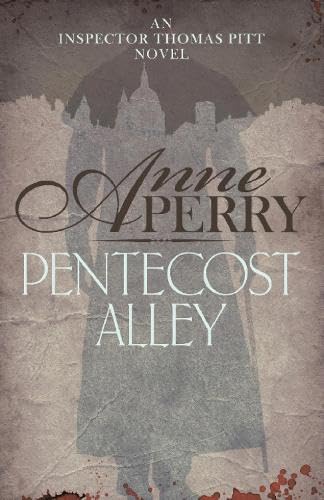
Anne Perry's Pentecost Alley is the sixteenth Thomas Pitt mystery, set in Victorian London. When a killing in Whitechapel bears the unmistakable marks of a murder already solved — a man already tried, convicted, and hanged for it — Superintendent Thomas Pitt faces the most disturbing question a detective can confront: the possibility that the law made a fatal and irreversible error. Perry constructs the investigation with her characteristic attention to Victorian social stratification, the corrupting weight of class distinction, and the political machinery that determines which crimes get solved and which are buried. Pitt's pursuit of the truth earns him powerful enemies among those who would prefer the first verdict to stand. The novel works both as an intricately plotted mystery and as a meditation on institutional failure, the finality of capital punishment, and what justice actually requires when the system has already acted.
Notes for sensitive readers
Reader-flagged moments and themes that may affect your experience.
Murder investigation involving prostitutes
Wrongful execution premise — a hanged man may have been innocent
References to Jack the Ripper era crimes
Political corruption and cover-up of possible injustice
Reader Verification
Be the first to verify
this rating
Have you read Pentecost Alley (Thomas Pitt Mystery, Book 16)? Submit a community rating to confirm or correct the AI estimate. Your review helps other readers make an informed choice.
Rate this book →Free · ~5 minutes · No account required
Similar reads
More Historical Fiction books from the catalog.


Think this AI estimate is off?
Flag an inaccuracy →Where to Buy
Affiliate links — BookLens earns a small commission at no extra cost to you.